
Every day, thousands of commercial trucks travel one of North Texas' busiest freight routes, connecting warehouses, distribution centers, and businesses across the region. Yet, Dallas I-30 diesel truck breakdowns remain a common challenge for owner-operators and fleet managers who depend on tight delivery schedules.
While no driver plans for a roadside failure, certain sections of the I-30 corridor consistently create conditions that increase mechanical stress. Heavy congestion, stop-and-go traffic, construction zones, and extreme summer temperatures all contribute to unexpected repairs that cost far more than just replacement parts.
Understanding where trucks experience the most problems, and why, can help fleets reduce downtime and keep deliveries moving.
Why the I-30 Corridor Is Tough on Diesel Trucks
Unlike long stretches of open highway, I-30 forces commercial vehicles to constantly adapt to changing traffic conditions. A truck may spend one hour cruising at highway speed and the next crawling through congestion or waiting in construction traffic.
This constant change places additional stress on:
● Diesel engines
● Cooling systems
● Air brake systems
● Turbochargers
● Tires and suspension
● Batteries and charging systems
Every stop, acceleration, and idle cycle increases wear that isn't always visible until something fails.
The Most Common Breakdown Hotspots
Although failures can happen anywhere, roadside mechanics often respond to similar situations along busy freight corridors.
Heavy Traffic Sections
Frequent braking and acceleration create extra heat throughout the vehicle.
Common failures include:
● Overheated engines
● Air system leaks
● Brake wear
● Transmission stress
Trucks that spend hours in slow-moving traffic often experience significantly more component wear than those operating primarily on open highways.
Construction Zones
Temporary lane changes and uneven pavement increase vibration throughout the truck.
Drivers frequently encounter:
● Suspension damage
● Loose electrical connections
● Tire failures
● Steering alignment issues
Even minor impacts can accelerate wear on already stressed components.
Distribution Center Routes
Repeated short trips between warehouses create a different maintenance challenge.
Instead of steady highway driving, trucks experience:
● Constant idling
● Frequent stops
● Limited engine regeneration
● Increased DPF loading
Over time, emissions systems become more susceptible to restrictions and engine derate events.
The Problems That Start Small
Most roadside breakdowns don't happen without warning. They usually begin as small maintenance issues that gradually worsen over time. Examples include:
A Minor Air Leak
At first, the compressor cycles slightly more often. A week later, air pressure recovery slows. Eventually, the truck cannot maintain operating pressure, resulting in an unexpected roadside stop.
Uneven Tire Wear
What starts as a slight alignment issue becomes:
● Faster tread wear
● Increased rolling resistance
● Heat buildup
● Blowout risk
Replacing a tire without correcting the underlying cause simply repeats the cycle.
Cooling System Problems
Small coolant leaks rarely seem urgent.
But during a Texas summer, reduced coolant levels combined with heavy traffic can quickly lead to overheating, engine derate mode, and costly downtime.
The Hidden Cost of Waiting
Many drivers focus on getting one more load delivered before scheduling repairs. Unfortunately, delaying maintenance often increases total operating costs. Unexpected breakdowns can lead to:
● Missed delivery appointments
● Emergency towing
● Driver downtime
● Customer delays
● Lost revenue
● Secondary component damage
What might have been a routine service appointment becomes a much larger repair project.
Why Mobile Repair Changes the Equation
Traditional repair often involves multiple steps:
1. Wait for roadside assistance.
2. Arrange towing.
3. Transport the truck.
4. Wait for shop availability.
5. Complete diagnostics.
6. Begin repairs.
Each step adds time and expense.
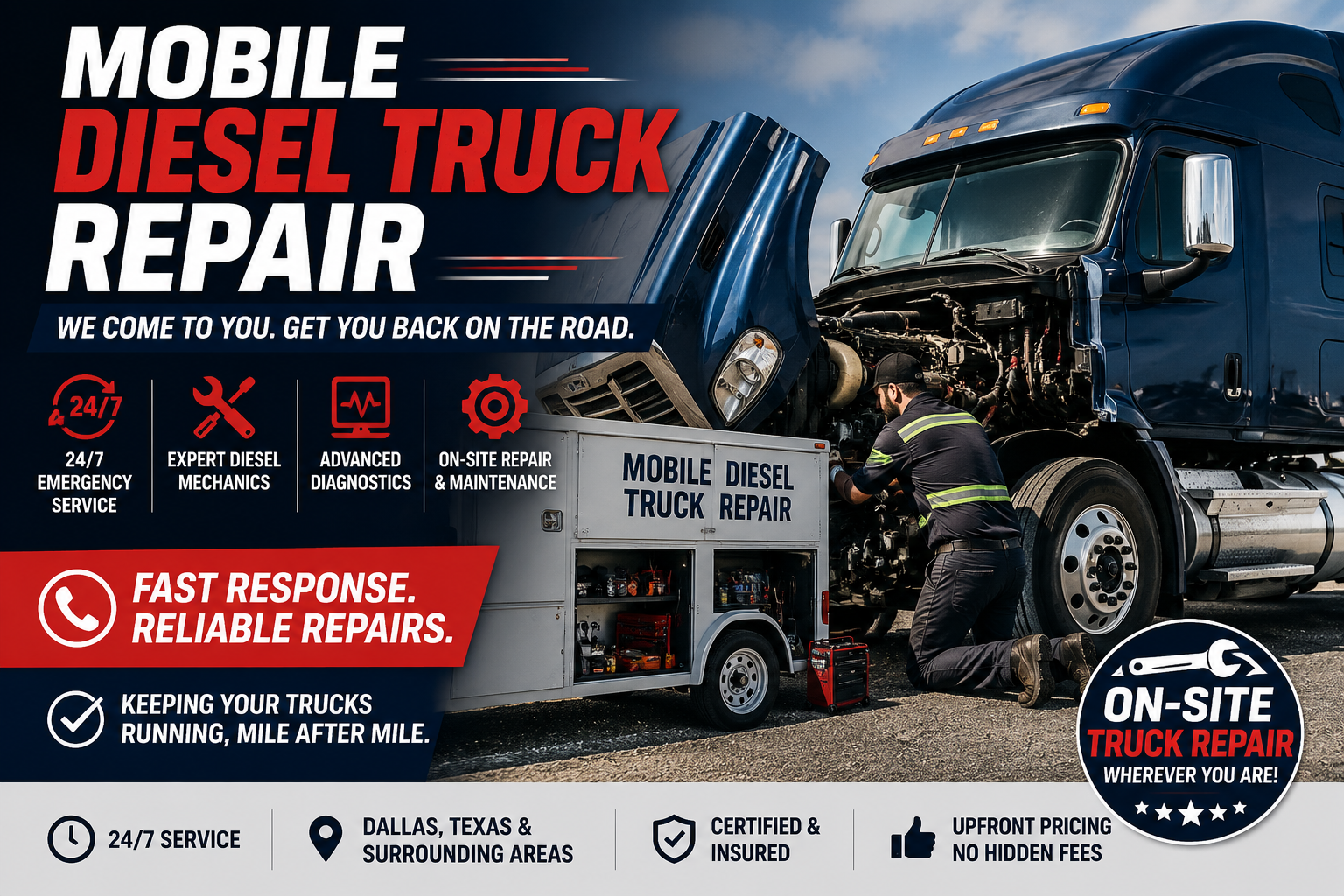
Mobile diesel repair simplifies the process by bringing certified technicians directly to the truck. Many common issues, including battery failures, air leaks, electrical problems, diagnostics, cooling system repairs, tire replacements, and trailer repairs, can be handled on-site.
For fleets, that means less downtime and faster returns to service.
Preventive Maintenance Creates Better Outcomes
The fleets that experience the fewest roadside failures don't necessarily buy different equipment. They simply identify problems earlier.
A proactive inspection routine includes checking:
● Tire condition and pressure
● Air system performance
● Coolant levels
● Battery health
● Belts and hoses
● Brake components
● Suspension wear
● Warning lights and fault codes
These small inspections often reveal issues before they become expensive breakdowns.
What Experienced Drivers Know
Veteran truck drivers rarely ignore changes in vehicle behaviour. They pay attention to:
● New vibrations
● Slight steering pull
● Longer crank times
● Reduced power
● Frequent regeneration cycles
● Air compressor activity
● Unusual engine sounds
Those subtle changes often provide days, or even weeks. of warning before a major failure occurs.
Listening to the truck is one of the most effective maintenance strategies available.
A Smarter Way to Stay on Schedule
Modern trucking is built around uptime. Every delayed load affects customers, dispatchers, drivers, and fleet profitability.
That's why more fleets are shifting from reactive repairs to preventive maintenance supported by mobile service solutions.
Instead of waiting for a breakdown to disrupt operations, they invest in routine inspections, early diagnostics, and fast on-site repairs that minimize interruptions and keep trucks moving.
Final Thoughts
Dallas I-30 diesel truck breakdowns are rarely the result of a single catastrophic event. More often, they're the final outcome of small issues that went unnoticed through miles of heavy traffic, construction zones, and demanding Texas conditions. By recognizing early warning signs and prioritizing preventive maintenance, fleets and owner-operators can reduce repair costs, improve reliability, and spend more time delivering freight instead of waiting for repairs.
Whether it's a roadside emergency or a routine inspection, Mobile Diesel Truck Repair delivers professional on-site diagnostics and repair services designed to minimize downtime and keep commercial trucks running efficiently across the Dallas–Fort Worth area.


Write a comment ...